Pac-In-Time (パックインタイム Pakkuintaimu) is a puzzle-platforming game in the Pac-Man series, developed by Atreid Concept (later known as Kalisto Entertainment) and originally published by Namco Hometek (and Mindscape in Europe). Pac-In-Time features a puzzle approach to platforming.
Pac-In-Time is a retheming of the 1993 Amiga and PC game Fury of the Furries, a game previously developed by Atreid Concept. While the game structure is the same as Fury of the Furries, Pac-In-Time replaces some of the Fury of the Furries characters with Pac-Man characters; notably, Fury of the Furries' main character "Tiny" is replaced with Pac-Man, with some additional characters from Pac-Man 2: The New Adventures appearing.
The Game Boy, MS-DOS and Macintosh versions is near identical to the original Fury of the Furries game, featuring its original game levels and design, as well as some sounds; the Super Nintendo Entertainment System version is presented as a separate game, featuring a different set of original levels with altered gameplay mechanics. Pac-In-Time was released in 1994.
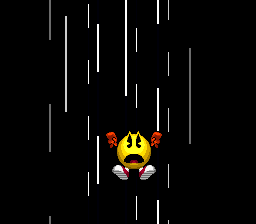
Pac-Man transforming into a young Pac-Boy as he is zapped away to 1975.
Throughout the years, the nefarious Ghost Witch had commanded her ghosts to disrupt the peaceful life in Pac-Man's world, pushing Pac-Man to step up and become the hero of the world. In current days, Pac-Man now resides with his family: Ms. Pac-Man, Pac-Jr. and Pac-Baby. Following the failure of her previous scheme to defeat Pac-Man, the Ghost Witch returns with another plan to stop her arch nemesis. The Ghost Witch casts a forbidden spell on Pac-Man; Pac-Man is zapped away by the Ghost Witch's spell as Ms. Pac-Man tearfully watches his husband vanish in thin air. The Ghost Witch's spell sends Pac-Man falling in a time warp, de-aging the yellow man into a young Pac-Boy as he lands in 1975, a timeframe when Pac-Man's heroic events have not occurred in history. The Ghost Witch casts magic on the inhabitants of the land, turning them hostile against Pac-Man under command from the Ghost Witch's ghost horde. Pac-Man must traverse the hazardous land to find the Ghost Witch's time warp that will send him back to the present, guarded by her servant Gum Monster.
Pac-Man's travels bring him across the mountains, forest, a forgotten palace, Pac-Man's home village and eventually the Ghost Witch's castle, with the strong desire to reunite with his family. Pac-Man's long and dangerous journey eventually brings him to the room with the time warp, guarded by the Gum Monster. Pac-Man bests the Gum Monster, revealing and powering the Ghost Witch's time warp back to the present. Pac-Man enters the time warp, turning Pac-Man back into an adult and sending him back to 1995, reuniting the man with his family.
Gameplay
Pac-In-Time is a puzzle platformer game in which the player controls a young Pac-Man across levels, bouncing around with ball-like physics. Gameplay varies between platforms.
Across all versions, Pac-Man must reach the end of the levels through differing goals, while damaging enemies and crossing through puzzle-structured terrain. Pac-Man must also use equipped items in order to traverse levels; using a rope to reach higher terrain, traversing water and blowing attack bubbles, throwing fireballs and using a large hammer to destroy fragile walls and floor. The items Pac-Man begins with vary by level, and are obtained by passing through item walls or rings. The game ends when Pac-Man runs out of lives. Upon completing a level, a password is displayed which allows the player to continue from the specific point by inputting its password on the title screen.
Game Boy/MS-DOS/Macintosh versions
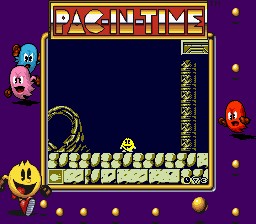
Gameplay of the Super Game Boy version.
Pac-Man's main goal in the Game Boy, MS-DOS and Macintosh versions is to land on the Exit platform located at the end of the level before remaining time runs out.
Pac-Man traverses across various hazards and must reach the end without harm. Pac-Man loses a life if he touches an enemy, hazardous terrain, gets crushed or time runs out. In order to obtain items, Pac-Man must run into electric walls to obtain items; running back into an electric wall featuring an item that Pac-Man is already in possession of will discard the item. Pac-Man can change items by pausing the game or by pressing the change item button.
In the final stage, Pac-Man must defeat Tiny, the guardian of the Portal of Time.
Super Nintendo Entertainment System version
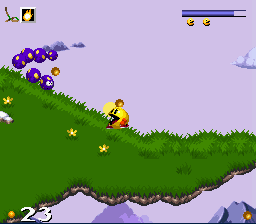
Gameplay of the Super Nintendo Entertainment System version of Pac-In-Time.
In the Super Nintendo Entertainment System version, Pac-Man's main goal is to eat all the Pac-Dots in the stage in order to open up the exit door and proceed to the next stage. Remaining Pac-Dots in order to unlock the exit are indicated on the bottom left counter.
Pac-Man has a vitality meter that decreases as he comes in contact with enemies, hazardous objects and/or terrain; the player loses a life if the vitality meter depletes, Pac-Man falls down dangerous terrain or is crushed between platforms. Pac-Man obtains items by passing through Power-Up Rings and can be switched by using the L and R buttons.
In the final stage, Pac-Man must defeat the Gum Monster.
Items
Across the levels, Pac-Man will come across various Power-Up Items that are required to traverse through the levels. Four inventory items are required to progress through the levels and become part of Pac-Man's inventory when obtained. The Power-Ups Pac-Man begins with will alter depending on the level, with corresponding Power-Up Rings/Electric Walls appearing within the levels.
Power-Up Items
Item
Description
Magic Rope
The Magic Rope lets Pac-Man automatically attach a rope to the nearest ceiling/wall, allowing Pac-Man to ascend, descend and swing using the rope and reach higher places. It can also be used to pull certain objects. Obtained by jumping through a Green Ring.
Fireballs
Fireballs lets Pac-Man shoot fireballs that can attack and damage enemies (with the exception of Ghosts). A Fireball attack can also be charged up by holding the action button for a few seconds. Obtained by jumping through a Yellow Ring.
Sledgehammer
The Sledgehammer allows Pac-Man to use his sledgehammer to hit nearby enemies and smash through thin surfaces. Obtained by jumping through a Red Ring.
Water Bubble
The Water Bubble allows Pac-Man to swim underwater when it is held. While underwater, Pac-Man can swim and shoot air bubbles that can attack underwater enemies and push certain objects. Obtained by jumping through a Blue Ring.
When played on a Super Game Boy, the game will have extra colors and a special screen border.
Game Gear
A canceled port, which has since had its ROM leaked online. The game only has four worlds total, and starts on what is typically World 2 in other versions, skipping World 1 entirely.
Macintosh
MS-DOS
Nintendo Switch
Included in Pac-Man Museum +. Based on the Super Famicom version of the game.
PlayStation 4
Included in Pac-Man Museum +. Based on the Super Famicom version of the game.
Super Nintendo Entertainment System/Super Famicom
As previously mentioned, the Super NES version is a unique version of the game that features different levels and goals.
The Japanese Super Famicom version features a number of changes that increase the difficulty of the game:
Pac-Man takes more damage from enemies and hazards, making it more difficult for him to survive.
The cutscene presentation has been altered:
Story text when entering new worlds is removed, simply naming the location instead.
The purple font used within story cutscenes are replaced with thin white text.
Two story scenes are merged in the intro: when Pac-Man falls down the time warp, dialogue is now displayed above it from a following scene.
Xbox One/Xbox Series
Included in Pac-Man Museum +. Based on the Super Famicom version of the game.
Windows PC
Included in Pac-Man Museum +. Based on the Super Famicom version of the game.
Fury of the Furries had ports for Amiga (and Amiga CD32), Macintosh, and MS-DOS, all of which were only released in the U.K. and France.
Play Online
These versions of Pac-In-Time are either listed in the public domain or are considered abandonware. Clicking the game title will lead you to a playable online version of it from archive.org (mobile compatibility may vary).
Versions of Pac-in-Time were in development for the Sega Genesis and Sega Game Gear, but were cancelled and did not see a retail release.[1]
An incomplete build of the Sega Game Gear version of Pac-In-Time was dumped online in 2005.
Inside the BIOS for the Game Boy Color, there is code that detects when a Pac-In-Time Game Boy cartridge is running, and attempts to enable a special color palette to the game. The palette used, however, is the default GBC color scheme (red + green), rendering the colorization useless.
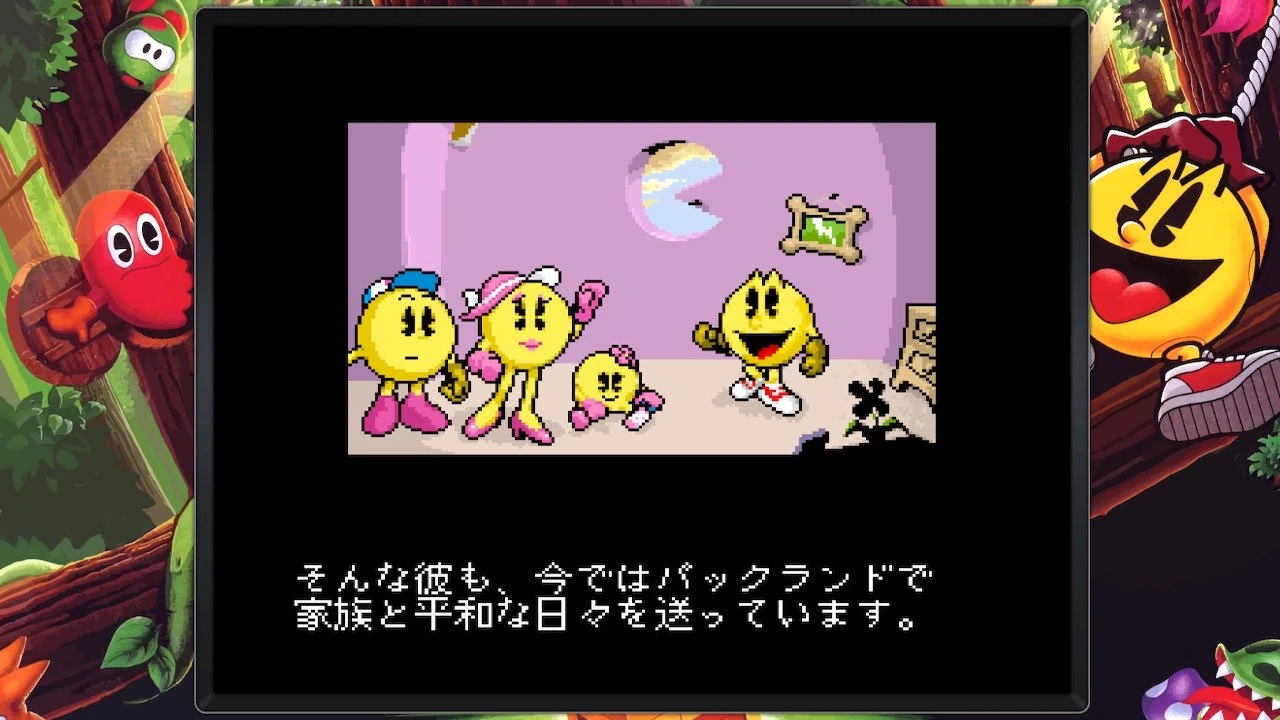
The Pac-Man Museum + version of Pac-In-Time is modified to redesign the members of Pac-Man's family
The Pac-Man Museum + version is a direct port of the Super Famicom release; however, the graphics of Ms. Pac-Man, Baby Pac-Man, and Jr. Pac-Man have been altered in the intro, replacing them with the "Pac-Mom", "Pac-Sis" and "Pac-Boy" characters, seen in the game as well.[2]